Teacher Training Programs
Yoga Teacher Training in Rishikesh For Those Who Want to Understand Yoga at Depth
200, 300, and 500 hour residential teacher training programs in Rishikesh. For aspiring teachers and for practitioners who simply want to go deeper than regular classes allow. Small groups, serious curriculum, experienced faculty.
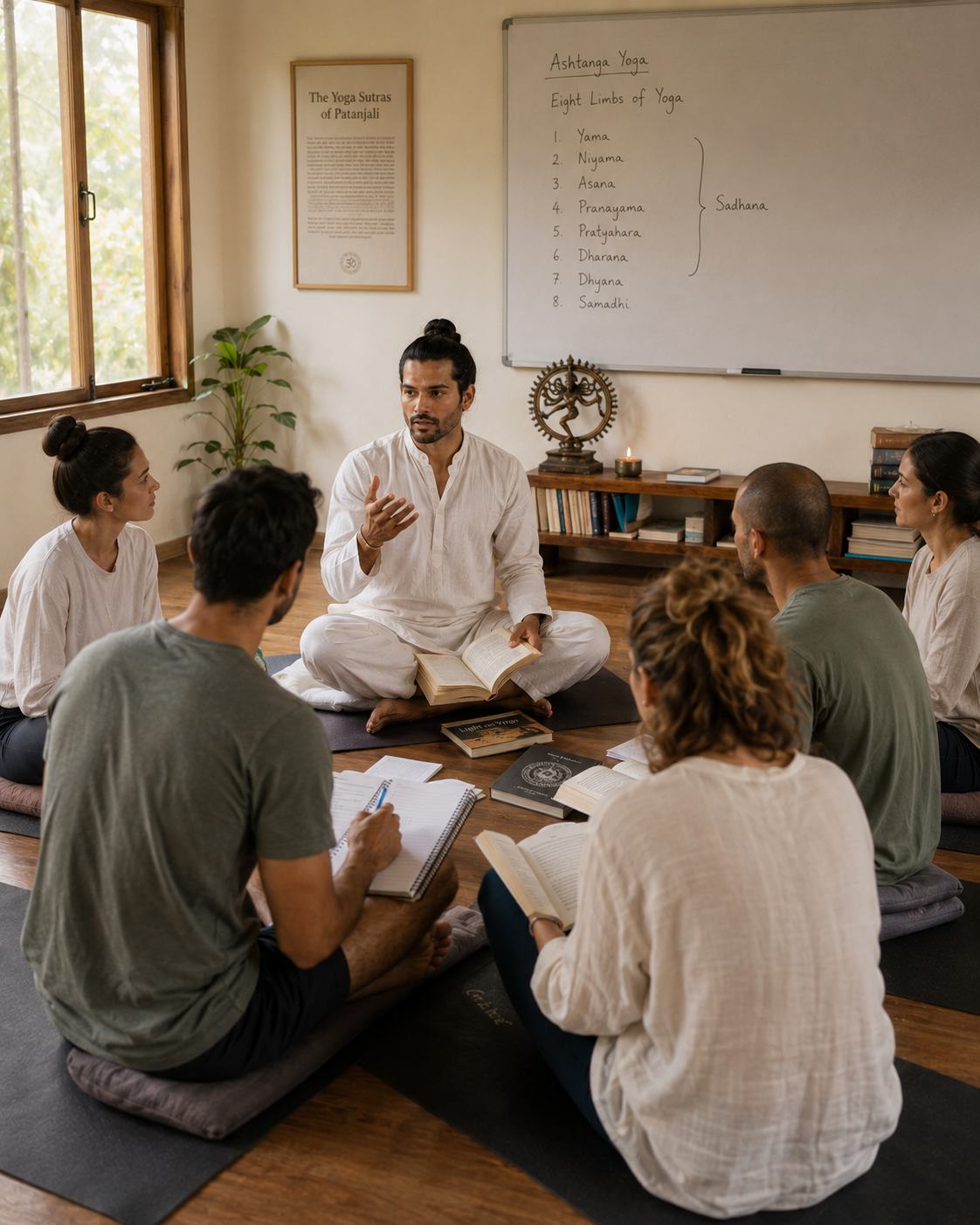
Teacher training is not an extension of regular yoga class it is a different kind of study
In regular yoga classes, you practise. You become more familiar with postures, more comfortable in your body, more consistent in your breath. This has genuine value. But there is a ceiling to what a student can develop through practice alone without understanding the anatomy behind the postures, the physiological basis of the breath practices, the philosophical framework the tradition emerged from, or the teaching methodology that makes instruction effective rather than merely demonstrative.
Teacher training breaks through that ceiling. It provides the academic and practical foundation that transforms practising yoga into understanding yoga. Students who have practised for five or ten years consistently report that teacher training revealed dimensions of their practice they had been unconsciously avoiding or entirely missing not because they lacked ability, but because they lacked the knowledge framework to see what was there.
This is why teacher training is not only for aspiring teachers. The depth it produces in personal practice is valuable regardless of whether you ever stand at the front of a class. In fact, many of our teacher training graduates never teach professionally and they describe the training as among the most transformative experiences of their yoga journey regardless.
Our programs are residential, held in Rishikesh, and run across approximately four weeks (200 hour), five weeks (300 hour), or nine to ten weeks (500 hour combined). They are demanding in terms of time and attention. They are also consistently, in the accounts of students who have completed them described as among the most significant educational experiences of any kind that participants have had.
The core subjects in all our teacher training programs
All three program levels build on the same foundational curriculum, with increasing depth and complexity as students advance. This is a summary of what is covered at all levels.
Asana Practice and Alignment
Deep study of postures across multiple yoga styles not just learning postures, but understanding the alignment principles behind them, the anatomical basis for each alignment cue, the sequencing logic that places postures in specific orders, and the methodology for teaching them safely to students with different bodies and limitations. Includes observed teaching practice with feedback from faculty.
Pranayama and Breathwork
Classical pranayama techniques studied as both personal practice and as something to teach. The physiological effects of each technique on the nervous system, respiratory function, and mind are addressed alongside the classical explanations. Students learn to practise safely, to recognise contraindications, and to guide others through breathwork appropriately.
Meditation
Multiple meditation techniques studied and practised throughout the training. Students develop a personal practice and learn to teach meditation including how to introduce technique, work with common difficulties, and adapt instruction for different student backgrounds and levels of experience. The relationship between meditation and the broader yoga tradition is also examined.
Yoga Philosophy and History
Study of foundational texts particularly the Yoga Sutras of Patanjali, selected Upanishads, and the Hatha Yoga Pradipika. This is not academic history for its own sake the philosophical content is studied in direct relationship to contemporary practice and teaching, addressing questions such as: what does this tradition understand the mind to be, what is yoga actually for, and how do these understandings inform what happens in a modern yoga class?
Anatomy and Physiology
Musculoskeletal anatomy relevant to yoga the spine, pelvis, shoulder girdle, hips, and knees in detail. Common injuries associated with yoga practice: their mechanisms, prevention, and how to adapt postures for students who arrive with existing physical limitations. Nervous system function and its relationship to breath and yoga practice. The goal is practical anatomical knowledge that directly informs teaching decisions.
Teaching Methodology
How to structure and deliver a yoga class effectively cueing (verbal, physical, and positional), demonstration, hands-on adjustment (when, how, and when not to), class sequencing logic, managing groups of mixed abilities, adapting instruction in real time. Extensive observed teaching practice throughout the program, with specific feedback from faculty on what is working and what needs development. This is where knowledge becomes skill.
What each day looks like during residential teacher training
Personal sadhana self-directed practice
Students practise independently before the day's teaching begins. This develops the self-reliance and internal motivation that will matter when teaching others.
Morning pranayama and meditation
Structured breathwork and seated meditation before the main asana practice. By week two, students report that this sequence produces a qualitatively different quality of practice in the session that follows.
Asana practice and technical study
The main asana session more analytical than a regular yoga class. Postures are deconstructed, alignment principles discussed, and teaching cues practised. Students both receive and deliver instruction during this session.
Lunch and free time
Rest, informal discussion, personal study, and exploration of Rishikesh. Integration happens in rest this time is protected.
Academic study
Alternating sessions in philosophy, anatomy, and teaching methodology with reading, discussion, and practical application exercises.
Teaching practice with feedback
Students practise teaching short sequences to each other under faculty supervision. Specific, developmental feedback. This is where classroom knowledge becomes actual teaching skill.
200 Hour vs 300 Hour vs 500 Hour what each level offers
Foundation
200
Hours Approx. 4 Weeks
200 Hour TTC
The foundation of yoga teaching and deep personal practice. Comprehensive curriculum across all six subjects. The starting point for anyone who wants to understand yoga seriously. Prerequisite: 6 months of regular practice.
Advanced
300
Hours Approx. 5 Weeks
300 Hour TTC
Advanced study for 200 hour graduates. Not a repetition a genuine advancement into more complex asana, specialised methodology, and deeper text study. Develops your individual teaching voice. Prerequisite: completed 200 hour training.
Complete
500
Hours Full Immersion
500 Hour TTC
The most comprehensive yoga study we offer. The 200+300 combined path, or a standalone 500 hour intensive. Five hundred hours of daily practice and study produces a depth of change in practice and understanding that shorter programs cannot approach.
Not sure which level is right for you?
Tell us about your experience and goals. We will give you an honest recommendation.
What students ask about teacher training
Yes and many of our teacher training graduates are in exactly this position. Teacher training changes the quality of personal practice in ways that years of regular classes cannot. The study of anatomy, philosophy, and teaching methodology reveals dimensions of postures, breath, and practice that practitioners who have not studied formally simply do not see. Students consistently describe the training as producing a fundamentally different experience of yoga not a more advanced practice, but a much more richly understood one.
We discuss fees directly with every prospective student pricing can vary based on program timing, specific format, and what is included. We are transparent about this. Accommodation inclusions vary by program format: some training packages are fully residential; others are taught-only, with students arranging their own nearby accommodation (we assist with this). We are always specific about inclusions when discussing program details. There are no surprises in what is covered.
Yes, programs run throughout the year. The most popular months for teacher training in Rishikesh are October through March, when the climate is most comfortable for intensive practice. We advise on the current schedule when you reach out. If you have a particular window of dates in mind, contact us and we will tell you whether a program is scheduled within that period or work with you to find the nearest suitable dates.
Explore All Programs & Services
Quickly select any service below to explore schedules, curriculum, and direct WhatsApp booking.
Ready to study yoga at depth? Let us talk through the details.
Tell us about your yoga background, your goals, and your timeline. We will recommend the right program level and discuss what the experience actually involves.