300 Hour Advanced TTC
300 Hour Advanced Yoga Teacher Training Going Deeper Requires a Different Kind of Effort
The 300 hour program builds directly on your 200 hour foundation. It does not repeat foundation content it advances beyond it, into territory that only becomes accessible once the basics are stable. Advanced asana, specialised methodology, deep text study, and the development of a genuine personal teaching voice.
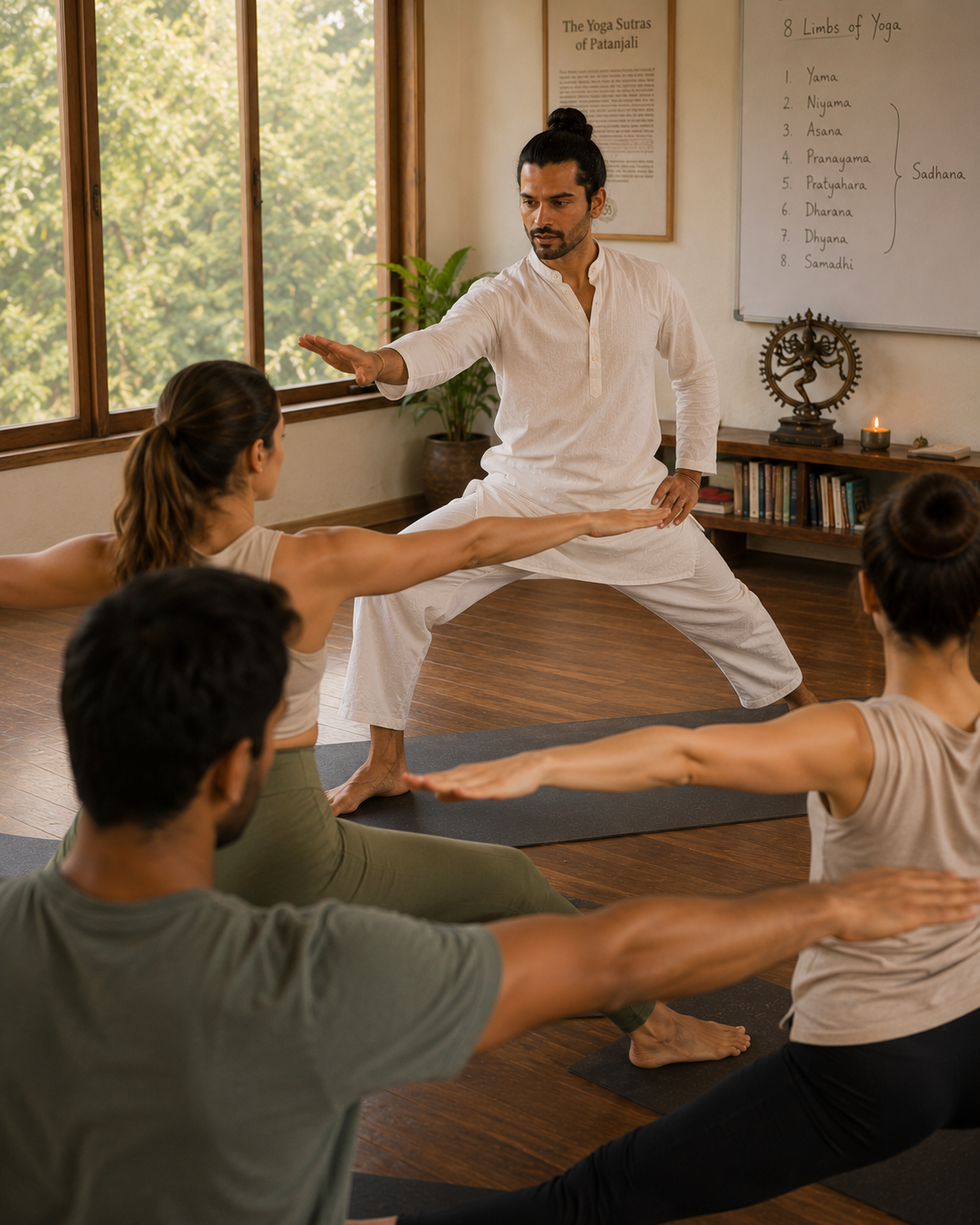
Why the 300 hour exists separately from the 200 hour and what it actually offers
After completing 200 hours of teacher training, most teachers find themselves in the same situation: they can teach competently, they understand the basics of alignment and anatomy, and they have a working relationship with the philosophical tradition. They are genuinely capable. But they also typically recognise that their teaching still sounds somewhat like their teachers, that there are significant areas of the curriculum they want to go deeper in, and that the most subtle and powerful dimensions of yoga in advanced asana, in philosophical understanding, in the teaching of meditation remain largely unaccessed.
The 300 hour program addresses this directly. It is not a repetition of 200 hour content with more examples. It is a genuine advance into territory that assumes the foundation is in place and builds from there more complex asana work, more nuanced adjustment techniques, more primary text study, more sophisticated sequencing methodology, and sustained attention to the development of each student's individual teaching identity.
The 300 hour also typically requires more of students emotionally and psychologically than the 200 hour not because it is more stressful, but because developing a genuinely individual teaching voice requires a level of self-examination and willingness to be seen clearly that the more technical content of the 200 hour does not demand in the same way.
The specific content that distinguishes the 300 hour from the 200 hour
Advanced asana and adjustment
Second series postures (in the Ashtanga tradition), advanced backbends, deep hip openers, complex arm balances, and advanced inversions all with the anatomical understanding and adjustment technique appropriate for safely introducing them to students. The emphasis is not on the teacher performing these postures, but on understanding them thoroughly enough to teach and assist others in them responsibly.
Primary text study in depth
Extended study of the Yoga Sutras of Patanjali the individual sutras read closely rather than as a survey, with discussion of their implications for contemporary practice and teaching. The Bhagavad Gita as a second primary text, addressing the question of action, purpose, and what yoga means in a life that is not a monastic one. The Hatha Yoga Pradipika in sections not covered in the 200 hour particularly the chapters on pranayama, mudra, and samadhi.
Specialised teaching methodology
Teaching yoga to students with injuries and chronic conditions when yoga is appropriate, how to adapt safely, and when to refer elsewhere. Trauma-informed yoga principles. Teaching yoga to older students and those with significantly reduced mobility. Designing multi-week programs rather than single classes. The fundamentals of teaching teacher training understanding how to transmit knowledge at the level of the curriculum, not just the posture.
Personal teaching voice development
Probably the most distinctive element of the 300 hour: sustained, individualised attention to the development of each student's personal teaching identity. This involves observing and reflecting on how you teach (not just what you teach), identifying which aspects of your teaching reflect genuine understanding and which are borrowed patterns from your teachers, and developing the confidence and clarity to teach from your own knowledge rather than from imitation.
Advanced pranayama and kumbhaka
Classical breath retention (kumbhaka) practice antara kumbhaka (internal retention) and bahya kumbhaka (external retention) taught progressively and safely. Advanced pranayama ratios. The relationship between kumbhaka practice and the classical goal of pratyahara (withdrawal of the senses). The physiological basis for retention practice and the safety considerations that govern its teaching.
Advanced meditation instruction
Open awareness practice (Rigpa / choiceless awareness) taught and developed. The classical progression from dharana (concentration) to dhyana (meditation) to samadhi. Teaching meditation to students with specific challenges anxiety, trauma, significant distraction. The relationship between the formal meditation practices of yoga and contemporary evidence-based approaches to mindfulness.
After 200 hours, you can teach. After 300 hours, you can begin to teach as yourself which is a different thing entirely.
This is the primary purpose of advanced training: not more knowledge, but the capacity to inhabit what you know with genuine confidence and personal authority.
The students who are ready for the 300 hour program
Teachers who have completed 200 hours and been teaching
The ideal 300 hour student has completed 200 hours of training and spent at least some time teaching ideally one to two years. The experience of teaching real students in real situations reveals specific gaps in knowledge and skill that the 300 hour is designed to address. Students who come to the 300 hour directly from the 200 hour (without teaching experience) typically get less from it than those who have practised what they learned.
Practitioners who completed 200 hours for personal practice
Some students who joined the 200 hour for personal practice development discover that the training transformed their practice enough that they want to go deeper into the texts, into the advanced asana, into the more nuanced dimensions of breath and meditation practice. The 300 hour is appropriate for this student too, though without the teaching experience context. We discuss this on a case-by-case basis.
Experienced teachers from other schools
Teachers trained to 200 hour level elsewhere who want to deepen their education with a different school for exposure to different methodologies, for the philosophical depth the 300 hour provides, or for the experience of extended study in Rishikesh. We assess each student's prior training when they apply and ensure the 300 hour curriculum represents a genuine advance from where they are, rather than a repetition.
Ready for the 300 hour?
Tell us about your 200 hour training, your teaching experience, and what you are hoping the 300 hour will develop. We will advise honestly.
Explore All Programs & Services
Quickly select any service below to explore schedules, curriculum, and direct WhatsApp booking.
Tell us about your training and teaching experience.
Share your 200 hour background, how long you have been teaching, and what you are hoping to develop. We will assess whether the 300 hour is the right next step and discuss what it involves.