200 Hour Teacher Training
200 Hour Yoga Teacher Training in Rishikesh The Foundation of Everything That Follows
The 200 hour teacher training is the foundation of yoga teaching and of a genuinely deep personal practice. Approximately four weeks of residential study in Rishikesh, covering all six core yoga subjects with the depth and small group attention that makes the learning genuine rather than cursory.
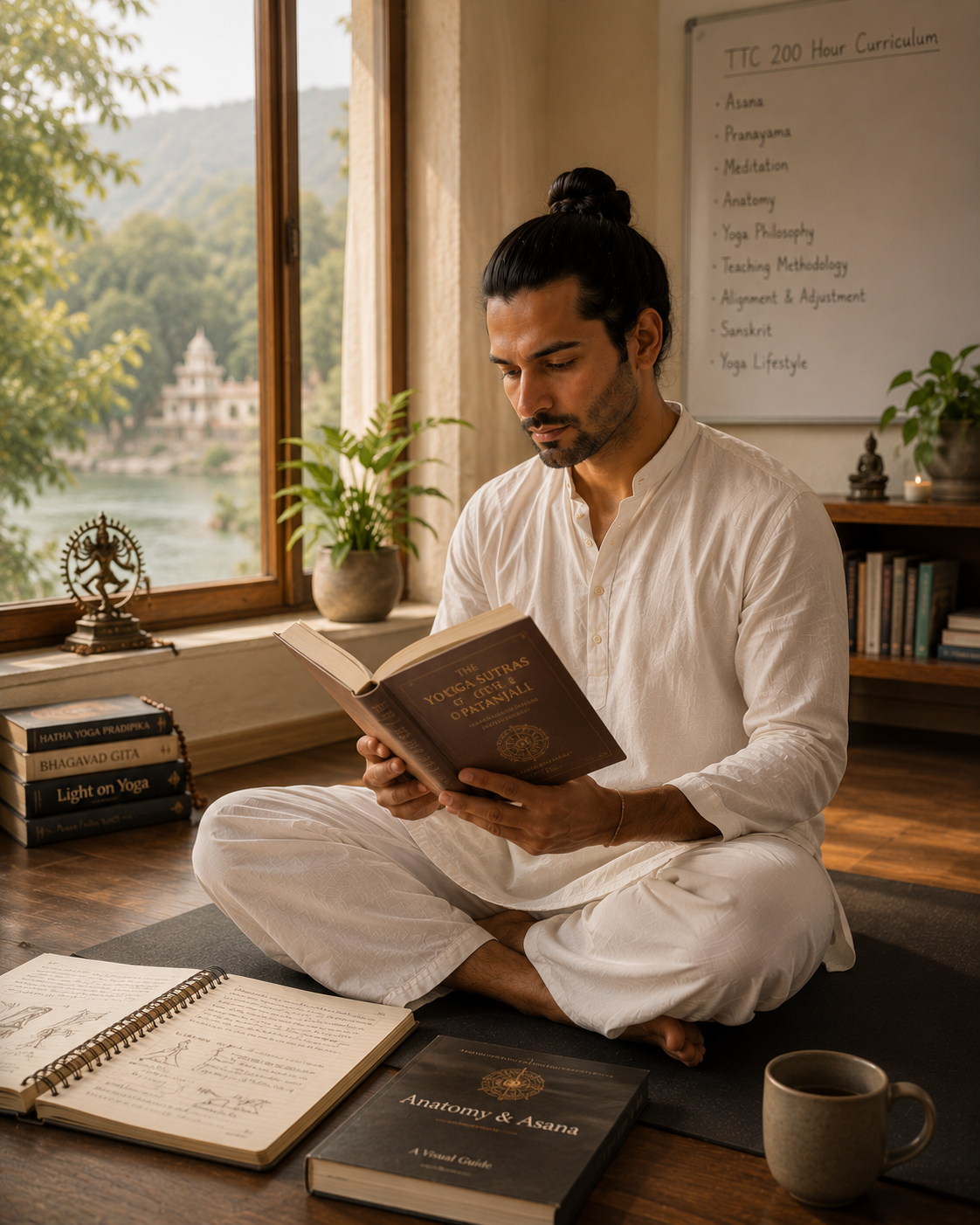
The 200 hour what it is, what it is not, and what it produces
The 200 hour yoga teacher training is the internationally recognised foundation level for yoga teachers. It is not the beginning it requires six months of regular practice as a prerequisite and it is not the destination. It is a comprehensive, rigorous introduction to the full scope of yoga education: physical, physiological, philosophical, and pedagogical.
Over approximately four weeks of residential intensive study in Rishikesh, students cover all six core subjects of yoga education in genuine depth not as a survey, but with enough time in each subject that the knowledge becomes workable rather than merely academic. The schedule is demanding: six days per week, eight to nine hours of structured teaching and practice per day. Students typically describe the middle weeks as the most challenging and the completion as one of the most significant experiences of their learning lives.
What the 200 hour program changes: the way you understand postures (from shapes you imitate to structures with anatomical logic), the quality of your personal practice (from habitual patterns to increasingly conscious choices), the relationship between breath and movement (from accompaniment to mechanism), and for those who choose to teach the foundation from which competent, responsible instruction becomes possible.
What you study in the 200 hour program in specific terms
Asana The Foundation of Physical Practice
All major posture categories standing, seated, prone, supine, inversions, backbends, forward folds, twists studied with detailed alignment principles, anatomical basis for each cue, common misalignment patterns, and appropriate modifications. Students practise postures and learn to teach them simultaneously, with observed teaching practice throughout. The Sun Salutation series and its variations are studied in detail as a complete sequence in their own right.
Pranayama Working with the Breath
Classical pranayama techniques including Nadi Shodhana, Kapalabhati, Ujjayi, Bhramari, Sitali, and Sama Vritti. Each technique studied for its physiological effects, its classical explanations, its contraindications, and the methodology for teaching it safely. The relationship between pranayama and the broader yoga tradition particularly the classical understanding of prana and the nadis is examined alongside modern physiological understanding.
Meditation Developing Practice and Teaching It
Multiple meditation techniques practised daily throughout the program. Students develop a personal practice, learn to work with common difficulties, and develop the capacity to guide others. Includes breath-centred awareness, body scan, mantra practice, and introductory open awareness. The history and philosophical context of meditation within the yoga tradition is addressed, as is the relationship between meditation and contemporary evidence-based practices.
Yoga Philosophy From Primary Texts to Practical Application
The Yoga Sutras of Patanjali studied in detail the eight limbs, the nature of mind (chitta), the fluctuations (vrittis), and the practices that address them. Selected Upanishads and the Hatha Yoga Pradipika as context. The Samkhya philosophical system as the conceptual foundation of classical yoga. The emphasis throughout: how do these ideas apply to what we actually do in a modern yoga class, and to how we live a modern life?
Anatomy and Physiology For Yoga Teachers
Musculoskeletal anatomy as applied to yoga the spine (vertebral structure, disc mechanics, spinal curves), pelvis and hip joint, shoulder girdle, knee, and foot. Common yoga injuries: their mechanisms, how they are avoided, and how to adapt practice for students with existing limitations. The autonomic nervous system and its relationship to breathing and yoga practice. Emphasis on practical anatomical knowledge directly applicable to daily teaching decisions.
Teaching Methodology From Knowledge to Instruction
Class structure and sequencing logic (not just how to sequence, but why). Verbal cueing: language choices, clarity, brevity, and the sequence of cues within a posture. Demonstration: when it helps and when it distracts. Hands-on adjustment: technique, consent, and when not to adjust. Managing groups with mixed levels. Observed teaching practice with specific, developmental faculty feedback throughout the program. The final week includes extended supervised teaching.
Everything you need to know before you apply
Prerequisites
Program Details
What to Bring
The students who join our 200 hour program
Aspiring yoga teachers
Students who want to teach yoga professionally in studios, retreats, corporate settings, or one-on-one. The 200 hour provides the foundation required for teaching responsibly and effectively. It is the beginning of a teaching career, not its completion: the real teaching development happens in the years of practice and instruction after the training ends.
Practitioners seeking depth
Students who have practised yoga for years and feel they have reached the ceiling of what regular classes can provide who want to understand, not just practise. The academic study of the 200 hour program reveals dimensions of postures, breath, and the practice's history and philosophy that years of class attendance simply do not surface. Many students describe this as permanently changing their experience of yoga.
People seeking a significant personal experience
Four weeks of immersive study and daily practice in Rishikesh is a significant personal experience regardless of whether teaching or deepened practice is the primary goal. Many students join knowing that the training will challenge them in ways they cannot fully predict, and discover consistently that it does. The experience of completing something genuinely demanding changes something.
Ready to apply for the 200 hour TTC?
Tell us your yoga background, preferred dates, and any questions. We will walk you through what the program involves and whether the timing is right for you.
What students ask before applying
You will have the foundational knowledge and skills to begin teaching yoga responsibly. For aspiring teachers, the next step is typically to find teaching opportunities studio classes, private students, corporate programs and to continue practising and studying. Teaching teaches you in ways the training cannot. Many graduates also continue to the 300 hour program after gaining some teaching experience. For those who joined for personal practice deepening, the typical outcome is a practice that is richer, more understood, and more sustainable which students then develop independently.
No. The 200 hour program requires your full attention and full schedule. The daily commitment of 8-9 hours of structured study and practice, plus independent reading and study in the evenings, does not leave meaningful time for other work or study. Students who try to maintain external commitments during the training consistently report that both suffer. The training is intense and asks for complete commitment for its duration. This is intentional the depth of learning it produces is proportional to the undivided attention given to it.
The primary differences: small group size (which allows individual attention and faculty responsiveness to the specific strengths and gaps of each cohort), the Rishikesh environment (which shapes the teaching in ways described throughout our website), the depth of philosophy curriculum (which we treat as substantive rather than token), and the quality and experience of the teaching faculty. The 200 hour curriculum structure is fairly standard across serious schools the differences lie in how deeply each subject is engaged, how closely the teachers work with individual students, and what the environment contributes to the learning.
Where the 200 hour fits in the complete teacher training journey
Explore All Programs & Services
Quickly select any service below to explore schedules, curriculum, and direct WhatsApp booking.
Interested in the 200 hour TTC? Start with a conversation.
Tell us your yoga background, what you are hoping to achieve through the training, and your preferred timing. We will walk you through what the program involves and discuss whether this is the right next step.