Yoga Style
Hatha Yoga The Classical Foundation of Modern Practice
Hatha yoga is where every serious yoga journey begins. A methodical practice built on individual postures, deliberate breath, and precise alignment designed not for performance, but for the development of genuine, lasting physical and mental clarity.
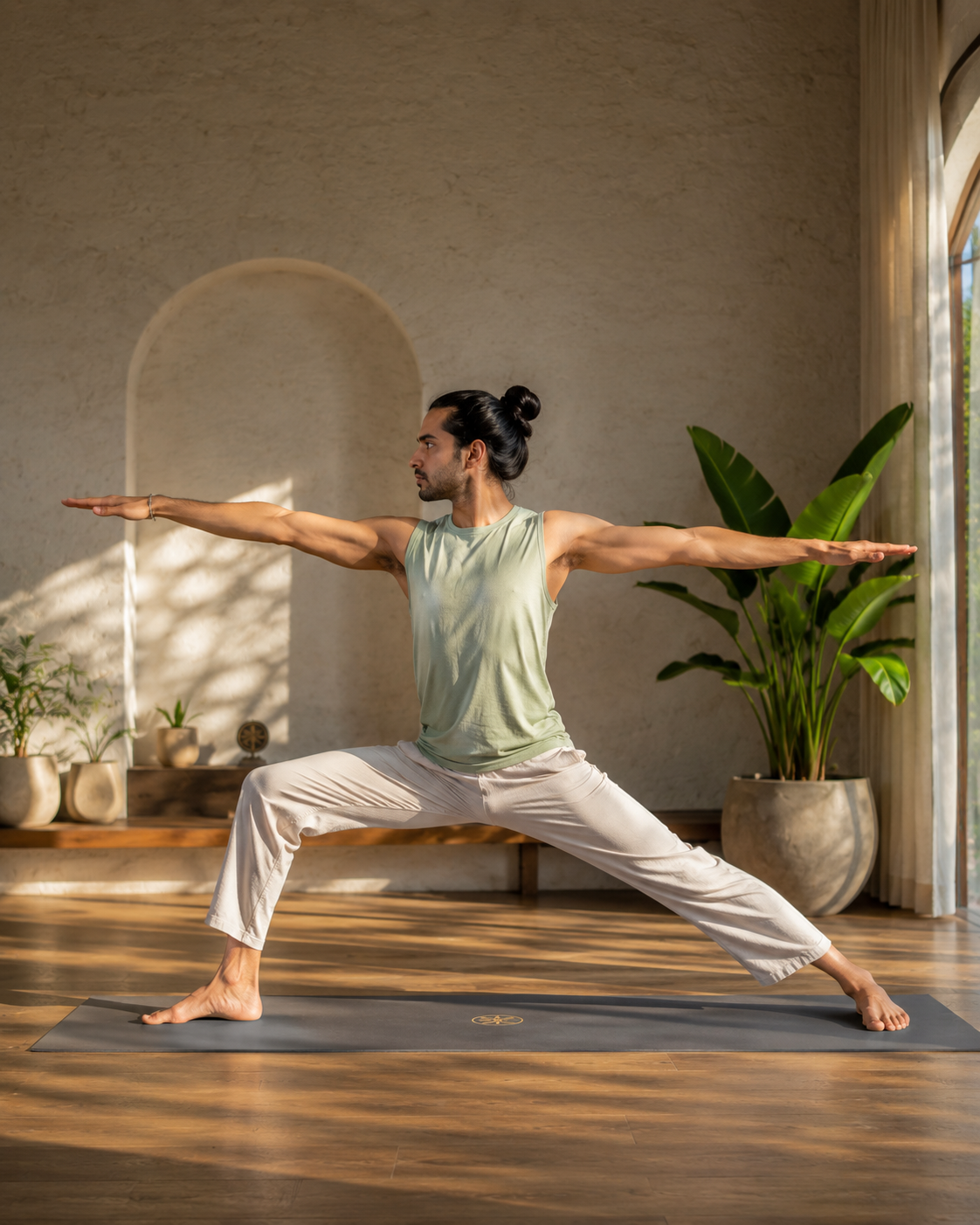
The word "Hatha" and why etymology matters
The Sanskrit word Hatha is a compound: Ha refers to prana the solar, upward-moving energy associated with the right nostril, active states, and clarity; Tha refers to apana the lunar, downward-moving energy associated with the left nostril, receptive states, and release. Hatha yoga is the practice of uniting these complementary forces creating balance not through suppression, but through deliberate physical and respiratory attention.
This is not metaphysical decoration it describes something observable. The tension between effort and ease, between engaging the body and releasing habitual holding, between the active and the quiet. In a Hatha class, you are always working with both: building strength in a posture while simultaneously softening unnecessary tension, maintaining effort in the body while allowing the breath to remain steady and relatively free.
The classical texts particularly the Hatha Yoga Pradipika (composed circa 14th century by Swami Swatmarama) and the Gheranda Samhita (17th century) systematised these physical practices as preparation for pranayama and, ultimately, for meditation. Asana in the classical understanding was never the destination. It was the vehicle.
This orientation changes what happens in a Hatha class. When postures are understood as preparation rather than performance, the quality of attention shifts. Students stop trying to achieve a particular external shape and begin learning to inhabit their bodies with increasing precision and care.
How our Hatha yoga classes are structured from opening to close
Every class follows a considered arc. Nothing is arbitrary sequencing, timing, and transitions are all intentional and pedagogically grounded.
Centering arriving in the body before asking anything of it
Classes begin seated or supine. Five to ten minutes of allowing the nervous system to downregulate noticing breath, releasing surface tension, making the transition from daily activity to practice. Students who skip this step spend the next twenty minutes doing the same thing involuntarily. Teachers who rush through it are training the wrong habit. We do not skip the opening.
Joint mobilisation and preparatory movement
Systematic work through the joints ankles, knees, hips, spine, shoulders, wrists followed by preparatory stretches and Sun Salutations (Surya Namaskar A and B). The Sun Salutation is itself a complete Hatha sequence: it links breath to movement, warms the whole body, and introduces the spinal movements (flexion, extension, lateral, rotation) that the main practice will explore in depth.
Standing postures, seated work, backbends, and twists
The core of the class. Postures are held for three to eight breaths, with the teacher explaining alignment principles, anatomical context, and breath relationship before and during each one. Modifications are offered throughout not as consolation prizes for the inflexible, but as genuinely appropriate variations for different bodies and stages of practice. The sequence is not random: earlier postures prepare specific joints and muscle groups for later ones.
Structured breathwork the classical heart of Hatha
The Hatha Yoga Pradipika lists pranayama as the primary practice, with asana as its preparation. In our classes, structured breathwork follows the asana practice because the body is then prepared muscles have released unnecessary holding, the spine has been mobilised, and the nervous system has begun to settle. Common techniques: Nadi Shodhana (alternate nostril), Ujjayi (victorious breath), Bhramari (humming breath), and Sama Vritti (equal ratio breathing).
Savasana the practice that integrates everything else
Savasana (corpse pose) is not a rest period or a reward for hard work. It is physiologically necessary the nervous system integrates the effects of practice during this time, and the body undergoes the cellular changes that make the practice produce lasting results. Students who leave before savasana significantly reduce what the preceding hour produces. We hold this time in every class, and it is not shortened to fit schedules.
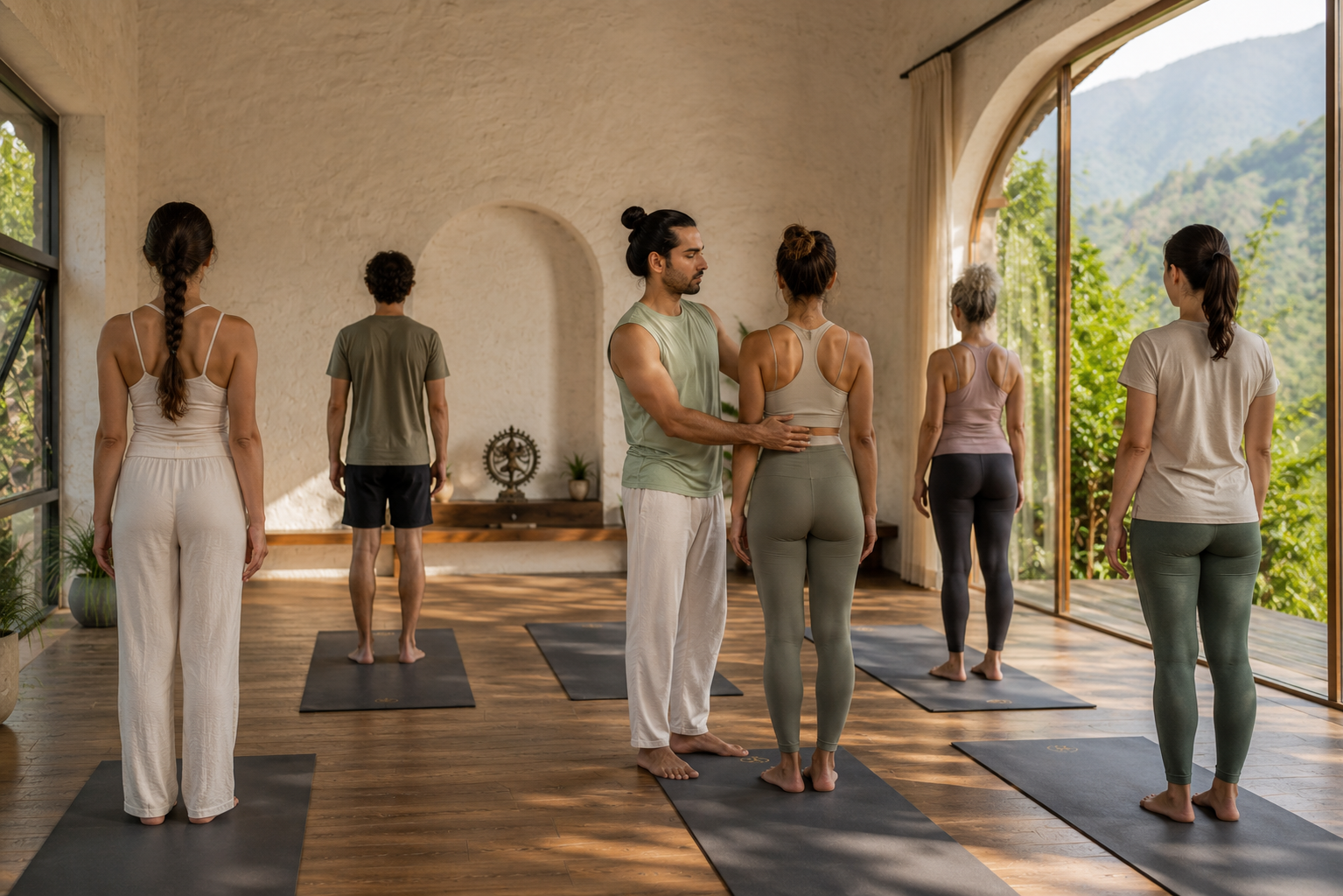
What we teach and why each posture group is part of the practice
Postures in our classes are not chosen for variety or to provide a workout. Each group serves a specific physiological and energetic purpose, and the sequence is constructed so that earlier postures prepare the body for later ones. This is classical yoga sequencing, and it is what separates a well-taught Hatha class from an exercise session with yoga branding.
Standing postures the structural foundation
Warrior I and II (Virabhadrasana), Triangle (Trikonasana), Extended Side Angle (Utthita Parsvakonasana), Revolved Triangle (Parivrtta Trikonasana), Half Moon (Ardha Chandrasana), and Tree (Vrksasana) build leg strength, hip mobility, pelvic stability, and single-leg balance. Teachers explain foot placement, pelvic alignment, spinal extension, and arm positioning not aesthetically, but because these structural details change what the posture produces.
Forward folds release and inward attention
Standing forward fold (Uttanasana), Seated forward fold (Paschimottanasana), Head-to-Knee (Janu Sirsasana), and Wide-Angle Seated (Upavistha Konasana). These postures decompress the spinal column, lengthen the posterior chain, and in sustained holds create the first experience of directing attention inward. We teach lumbar spine safety over depth: reaching forward with a rounded lower back does less than hinging forward with a lengthened spine and stopping where you are.
Backbends countering habitual flexion
Cobra (Bhujangasana), Sphinx, Locust (Shalabhasana), Bow (Dhanurasana), Bridge (Setu Bandhasana), Wheel (Urdhva Dhanurasana), Camel (Ustrasana), and Fish (Matsyasana). Backbends open the anterior body and require genuine integration of the whole spine not simply forcing the lumbar into extension while the thoracic remains stiff. Detailed anatomical guidance prevents the common strain patterns that poor backbend instruction produces.
Twists spinal rotation and digestive stimulation
Bharadvajasana (simple seated twist), Ardha Matsyendrasana (half spinal twist), Marichyasana, Supine twists, and Revolved postures. Twists improve thoracic rotation, hydrate spinal discs through the compression-release mechanism, and classically support digestive function through the gentle compression of the abdominal organs. We always move into twists from length never forcing rotation in a compressed spine.
Inversions graduated approach to reversing gravity
Legs-up-the-wall (Viparita Karani), Shoulderstand (Sarvangasana), Headstand (Sirsasana), Plow (Halasana) introduced progressively and only when the student has the required shoulder openness, neck stability, and core support. Inversions are not taught as achievements to unlock. They are taught when the body is ready, and not before.
What regular Hatha practice reliably produces
These are honest observations from years of teaching, not marketing claims. The development is real, but it is gradual and proportional to consistency.
Postural change you can see
Most students who practise consistently for three to six months notice changes in how they carry themselves in sitting, standing, and walking. This is not cosmetic. It reflects actual changes in muscle balance, joint mobility, and the neuromuscular patterns that control habitual posture. Desk workers notice it most dramatically, because their habits are most entrenched at the start.
Breath quality throughout daily life
Shallow thoracic breathing is the norm for most adults. Hatha practice through both the physical demands of postures and the dedicated pranayama component gradually retrains the respiratory pattern. Students often notice this first as an increased capacity for calm under pressure, or as a longer and slower breath in situations that previously triggered shallow breathing. The change in breath quality is subtle but pervasive.
Somatic intelligence
The discipline of holding a posture with full awareness noticing where effort is needed, where resistance arises, how the breath responds develops a quality of body-sense that is distinct from physical fitness. Students become genuinely more able to sense what their body is doing, to notice tension before it becomes pain, and to make subtle adjustments that prevent overuse injuries. This translates directly into every physical activity, not just yoga.
A workable meditation foundation
The most significant development is also the least visible externally. The capacity to maintain attention on a single object a posture, the breath despite the mind's habitual preference to wander is the foundational skill of meditation. Hatha practice trains this capacity directly and progressively. Students who practise Hatha consistently for six months find that sitting meditation, which felt impossible before, becomes accessible. This is not accidental it is what the classical tradition designed Hatha to produce.
Structural resilience and injury prevention
Well-taught Hatha builds the structural integrity hip stability, spinal integrity, shoulder girdle coordination, foot-to-core kinetic awareness that prevents the common overuse injuries of active people and desk workers alike. We teach alignment not as a cosmetic rule but as the biomechanically sound way of loading joints that allows practice and everything else to continue safely over years.
A foundation that transfers to other practices
Students who begin with Hatha before transitioning to Vinyasa, Ashtanga, or other styles almost universally report that the transition is cleaner, the risk of injury lower, and the quality of practice higher. Foundational work compounds. It is not beginner content that you graduate from it is the substrate on which everything else is built, and it keeps producing at every level of experience.
"Hatha yoga is a stairway for those who wish to climb to the higher reaches of Raja yoga."
Swami Swatmarama, circa 14th century. The classical understanding: physical practice is preparation, not a destination in itself.
Hatha yoga is right for a remarkably wide range of students
Complete beginners with no yoga experience
The methodical pace, clear explanation, and focus on fundamentals make Hatha the most appropriate starting point for someone who has never practised. You are not expected to be flexible, coordinated, or strong when you begin those qualities develop through the practice. What you do need is willingness to listen and work patiently.
People returning after injury or a long break
Whether returning after months away or carefully re-entering practice following a physical setback, Hatha's controlled pace and detailed alignment guidance make it the safest and most productive re-entry point. Our teachers adapt postures to accommodate current limitations without reducing the quality or integrity of the practice.
Experienced practitioners from other styles
For Vinyasa or Ashtanga practitioners, periodic return to deliberate Hatha practice reveals alignment patterns that the pace of flow obscures. Many experienced students find that a well-taught Hatha class reveals more about a posture they have been practising for years than any advanced class has. Depth through precision, not through addition of complexity.
Ready to begin Hatha yoga?
Tell us your experience level and whether you prefer online or in-person. We will recommend the right starting class for you.
The first three months of Hatha practice an honest guide
Everyone progresses at a different rate. These milestones are common but not prescriptive.
Weeks 1 to 3: Learning the language of movement
The first few classes are about orientation learning what basic cues mean ("lengthen your spine," "draw your navel in"), becoming familiar with posture names, and finding a stable base in each shape. Many new students feel overwhelmed by the volume of information arriving at once. This is normal and passes. By week three, the main standing postures begin to feel recognisable enough that attention can shift from "what am I supposed to do?" to actual bodily experience. This shift is significant.
Weeks 4 to 8: Developing the breath-body connection
With regular practice, the body begins adapting particularly in hamstring and hip flexibility, which most desk-based adults find the first areas to respond. More significantly, students begin to feel the relationship between breath and posture: how an exhale deepens a forward fold, how an inhale naturally lifts the chest in a backbend, how holding the breath in a difficult posture signals that the posture is too demanding for this stage. This breath-body feedback loop is the hallmark of developing Hatha practice.
Weeks 9 to 12: The practice becoming genuinely meditative
By three months of consistent practice, something qualitative shifts. Students stop measuring their yoga by how far they can reach or how long they can hold, and begin to experience the practice as genuinely meditative not because they have decided to make it so, but because the accumulated discipline of returning attention to the body and breath has begun to produce the conditions in which that quality arises on its own. This is what the classical tradition was pointing to, and it is entirely accessible to ordinary people who practise regularly.
Everything you want to know before your first Hatha class
No and this is one of the most common misconceptions about yoga. Flexibility is a result of consistent Hatha practice, not a requirement for beginning it. The stiffest students often progress most visibly in their first few months precisely because they are starting from a point where the practice has the most to offer. What you need is not a particular physical quality, but the willingness to work patiently and honestly with where your body actually is, rather than where you wish it were.
Two to three sessions per week is sufficient for consistent development at the beginning. Regularity matters more than frequency three sessions a week every week for three months is significantly more productive than six sessions a week for two weeks followed by an irregular schedule. The nervous system learns through repetition over time, and inconsistency disrupts the pattern-building that produces lasting physical and mental change. Daily practice produces faster development, but only when the body has sufficient recovery time between sessions which varies by individual.
Neither characterisation is entirely accurate. Hatha is methodical it lacks the cardiovascular load of Vinyasa, but holding a Warrior III correctly for eight breaths with full attention is demanding. The physical work comes from precision and duration rather than pace. Students who approach a Hatha class with full attention rather than simply going through the shapes typically find it more challenging than they expected. The absence of constant movement does not mean ease; it means that fewer things are distracting you from what the posture actually demands.
In many cases, yes but the answer depends on the specific condition, its severity, and its current state. Hatha yoga is widely practised by people with chronic back issues and, when taught well, can be genuinely supportive in building the muscular and postural resilience that reduces chronic strain. The critical requirements are: honest communication with your teacher about your condition before the class begins, a teacher willing and able to offer appropriate modifications, and your own willingness to work within your current limits rather than pushing through them. We always ask about health considerations and adapt accordingly. We also always recommend consulting your physician or physiotherapist about any serious or acute condition yoga is a complement to medical care, not a substitute for it.
Return to your practice. Seriously it is this simple. You will almost certainly find that you have retained more than you expected. The body has a remarkable memory for movement patterns it has practised consistently, and what feels like regression after a break is usually temporary recalibration rather than actual loss of ability. What matters is not that you never stopped, but that you keep returning. We welcome students who have been away without any expectation of explanation or apology.
The most significant difference is the teaching lineage and context. Rishikesh has been the centre of formal yoga education in India for generations. Teachers who have studied and practiced here have typically spent more time in a community of serious practitioners, studied with teachers who were themselves students of teachers in an unbroken tradition, and developed their practice in an environment where yoga is treated as a complete discipline rather than a fitness activity. This influences how they teach the depth of explanation, the patience with fundamentals, the integration of pranayama and philosophy alongside asana. The environment also has a direct effect: early morning practice in Rishikesh, near the Ganges, in a community where yoga is simply what people do, is a different experience from the same class in a urban studio. This is not marketing. Many students describe the difference after their first session in Rishikesh with some surprise.
There is no single prescribed next step it depends entirely on what you are looking for. Many students continue deepening Hatha for years without needing another style; depth within one well-taught tradition often produces more than breadth across many superficially. Others naturally gravitate toward Vinyasa for more dynamic, flow-based practice; Yin yoga for slower, connective-tissue-focused work; Ashtanga for a more rigorous fixed sequence; or dedicated meditation as a standalone practice. We discuss this individually with every student there is no script. What matters is that your next practice is chosen based on what you actually need, not on what you have seen on social media or what seems most aspirational.
Other yoga styles and programs at The Seventh Center
Explore All Programs & Services
Quickly select any service below to explore schedules, curriculum, and direct WhatsApp booking.
Start your Hatha practice online or in Rishikesh.
Tell us your yoga experience, what you are looking for, and your preferred format. We will recommend the right class and schedule a time that works for you.