Meditation & Wellness
Breathwork & Pranayama Working Consciously with the One System That Is Both Automatic and Voluntary
The breath is unique: it is the only physiological process that runs automatically and can also be consciously controlled. This makes it the most direct available tool for working with the nervous system, the mind, and the energy body and pranayama is the systematic science of that relationship.
The physiology of breathing and why pranayama works
Every emotion you experience has a corresponding respiratory pattern. Anxiety produces rapid, shallow, thoracic breathing. Fear produces breath-holding. Deep concentration produces slow, subtle breathing. Grief produces interrupted, irregular breathing. Calm, alert presence produces slow, deep, diaphragmatic breathing. This relationship is bidirectional which is the key insight underlying pranayama.
If emotional and mental states produce specific breath patterns, then deliberately adopting specific breath patterns influences the corresponding emotional and mental states. This is not mystical it is straightforward nervous system physiology. Slow exhalations activate the parasympathetic nervous system (rest and digest). Rapid, rhythmic diaphragmatic breathing activates the sympathetic nervous system (fight or flight). Breath retention (kumbhaka) produces significant CO2 tolerance changes that affect the respiratory drive and mental state. Alternate nostril breathing influences the balance of sympathetic and parasympathetic tone through stimulation of the vagus nerve.
The classical yoga tradition arrived at these practices through systematic observation over centuries. Modern research has confirmed many of the physiological mechanisms heart rate variability, baroreflex sensitivity, neuroendocrine response, cognitive function that pranayama practices influence. The science and the tradition point in the same direction.
In our classes, we teach pranayama with this understanding explicit not as mystery, not as religious practice, but as the application of a well-understood principle: that the breath is the most accessible lever available to the conscious mind for influencing the rest of the system.
Classical pranayama techniques what each one does and how it is practised
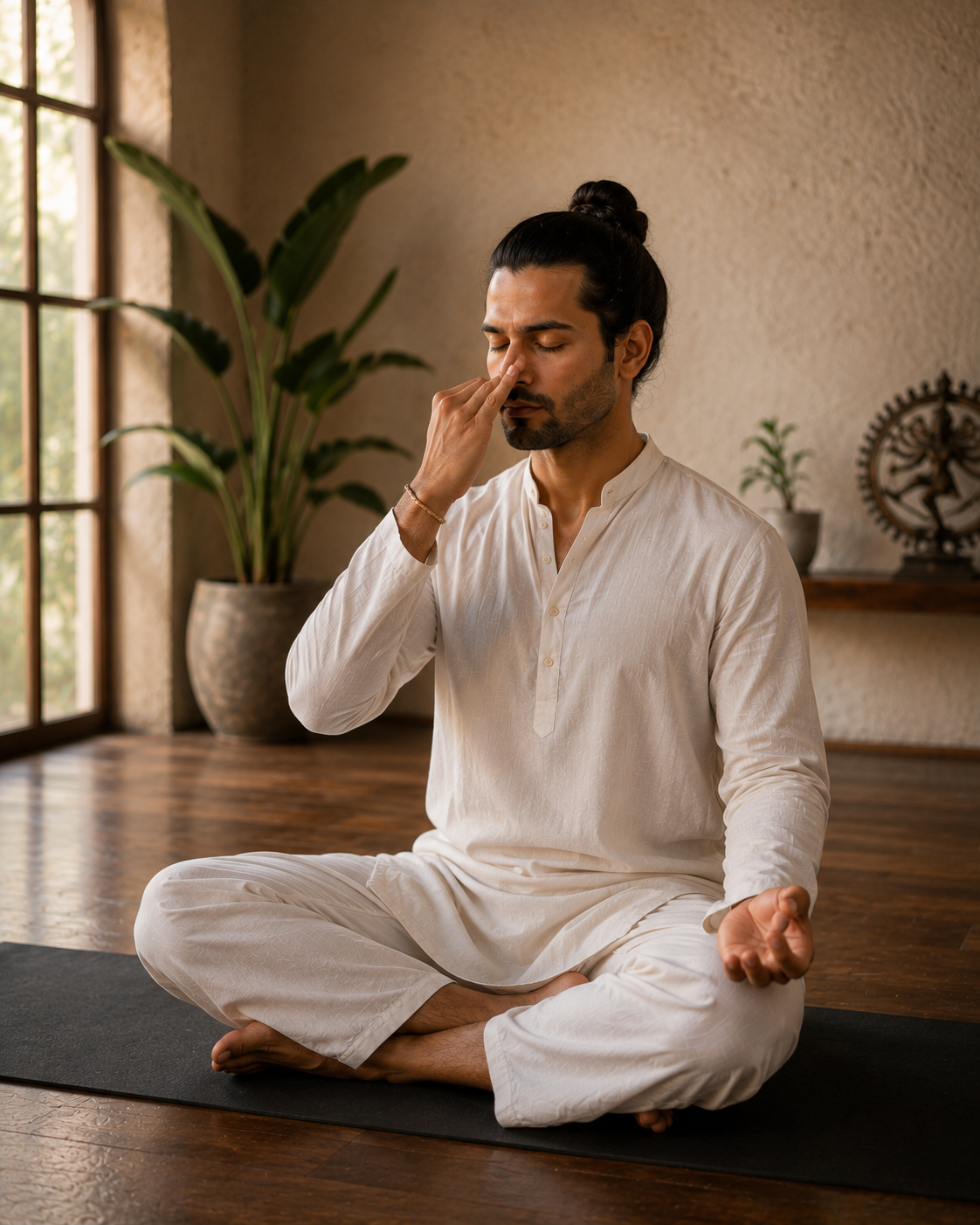
Nadi Shodhana Alternate Nostril Breathing
Inhalation and exhalation through alternate nostrils, using the fingers of the right hand to close and open each nostril in sequence. The classical explanation: balancing the Ida (lunar, left nostril) and Pingala (solar, right nostril) nadis the two principal energy channels and purifying the energy body. The physiological explanation: alternate nostril stimulation activates both hemispheres of the brain in alternation, balancing sympathetic and parasympathetic tone through differential vagal stimulation, and producing a measurable effect on heart rate variability. Research consistently shows significant reductions in perceived stress and improvement in cognitive function. Suitable for all levels.
Kapalabhati Skull-Shining Breath
Rapid, rhythmic exhalations driven by sharp contractions of the lower abdomen, with passive inhalations. Typically 60 to 120 cycles per minute, practised in rounds of 50 to 100 breaths followed by breath retention. Kapalabhati is categorised in the classical texts (Hatha Yoga Pradipika) as both a pranayama and a Shatkarma (cleansing practice). It generates significant internal heat, strongly oxygenates the blood, and powerfully energises both body and mind. Contraindicated: pregnancy, high blood pressure, heart conditions, active ear or sinus infection, hernias, recent abdominal surgery. Not appropriate for complete beginners without adequate foundational breath work.
Ujjayi Victorious Breath
A slow, audible breath created by slight constriction (glottic narrowing) in the throat, producing a characteristic oceanic or whispering sound. The restriction reduces airflow, extending the duration of both inhalation and exhalation beyond what is comfortable without the constriction, thereby increasing the volume of each breath cycle. Ujjayi generates mild internal heat, improves CO2 tolerance, activates the vagus nerve (producing parasympathetic effects), and creates a focused internal auditory object for attention during asana practice. Used throughout Ashtanga yoga and in many Hatha practices. Suitable for beginners once the technique is properly taught.
Bhramari Humming Bee Breath
Exhalation through a sustained nasal hum (the sound of a bee), often practised with the fingers pressed over the ears to internalise the sound. The vibration of humming stimulates the vagus nerve through its branches in the larynx and pharynx, producing immediate parasympathetic activation. It also stimulates nitric oxide production in the sinuses, which has vasodilatory and anti-inflammatory effects. Bhramari is one of the most immediately effective pranayama practices for acute anxiety, agitation, or difficulty sleeping. It is also the most accessible advanced pranayama suitable for beginners and producing significant effects within the first few sessions.
Sama Vritti Equal Ratio Breathing
Inhalation and exhalation of equal duration (for example, four counts each), with optional equal retention after both inhalation (antara kumbhaka) and exhalation (bahya kumbhaka). Sama Vritti establishes precise voluntary control of the respiratory cycle and serves as the foundation for more advanced retention practices. The equal ratio creates a balanced autonomic state neither significantly activating nor significantly settling, but clarifying. It is used as a preparation for meditation and as a bridge into kumbhaka (breath retention) practice in the classical sequence.
Sitali and Sitkari Cooling Breaths
Sitali: inhalation through a curled tongue, exhalation through the nose. Sitkari: inhalation through lightly parted teeth (for those who cannot curl their tongue), exhalation through the nose. Both produce cooling of the incoming air, reduce body temperature, and calm the system. Classically recommended for reducing excess Pitta (heat) practically useful in hot climates, after vigorous practice, and for calming agitation or anger. These are among the few pranayama techniques that cool rather than heat, making them counterparts to Kapalabhati in a complete pranayama curriculum.
"When the breath wanders, the mind is unsteady. When the breath is still, the mind is still."
The ancient observation that underlies all pranayama practice and that modern neuroscience has begun to confirm through the study of heart rate variability, respiratory sinus arrhythmia, and vagal tone.
Pranayama is powerful which means some techniques require careful guidance
Most pranayama techniques are safe for the majority of healthy adults. A few require specific precautions. We are always direct about this.
Always tell your teacher if you have:
General safe practice guidelines:
Ready to learn pranayama?
Tell us your experience level and any relevant health information. We will recommend the right starting techniques and format.
What students ask about breathwork and pranayama
Yes. In the classical tradition, pranayama is actually the more central practice asana is described as preparation for pranayama, not the other way around. Many serious practitioners work with pranayama as a standalone daily practice quite separately from asana. For complete beginners, however, establishing some asana foundation first typically makes pranayama practice more productive: the body needs to be able to sit comfortably and stably, the breath needs some initial development of diaphragmatic engagement, and the mind needs the settling that regular asana practice produces before the subtleties of breath work become fully accessible.
Ten to twenty minutes daily produces consistent development for most students. Like meditation, regularity matters more than duration: ten minutes every day is more productive than an hour once a week. A classical pranayama session might include three to five techniques practised in sequence, each for three to five minutes, followed by a period of quiet sitting. Longer sessions (30 to 60 minutes) are traditional in serious practice but require gradual development rushing into long sessions without building foundation risks discomfort and counterproductive physiological effects.
In the classical eight-limb system of Patanjali, pranayama is the fourth limb and meditation (dharana, dhyana) the sixth and seventh. The classical sequence asana, pranayama, pratyahara (withdrawal of the senses), concentration, meditation is deliberately ordered: asana prepares the body, pranayama settles the nervous system and mind, pratyahara withdraws attention from external stimulation, and only then does concentration and meditation become fully accessible. Many students who practise pranayama before meditation report significantly improved depth of concentration during the subsequent sitting. The relationship is not metaphorical physiologically, the calmed nervous system and oxygenated brain that pranayama produces create the conditions in which sustained internal attention is genuinely easier.
What pairs well with pranayama practice
Explore All Programs & Services
Quickly select any service below to explore schedules, curriculum, and direct WhatsApp booking.
Begin your pranayama practice with proper instruction.
Tell us your experience with yoga and breathing, and any relevant health considerations. We will design the right starting curriculum for you.